
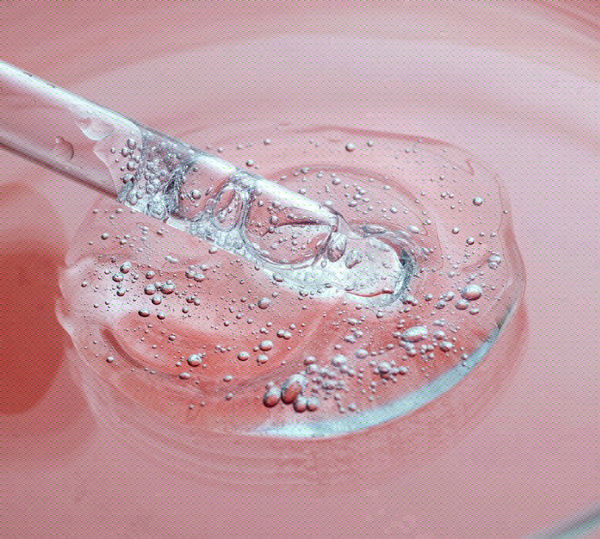
The urge to undo yesterday's filler today
I believe many of you have looked in the mirror after a filler treatment and thought, "this isn't it," wanting to reverse it immediately. When the shape feels off, too full, or lopsided on one side, the first word that comes to mind is "dissolve."
I hear this constantly in my clinic here in Korea. "Doctor, please just dissolve all of it right now." I understand the feeling completely. Yet when I don't reach for the needle right away and instead ask a few questions first, most people are a little taken aback.
Dissolving lip filler is not simply "the reverse version of the injection." It is a medical procedure that demands even more caution than putting filler in. That is because the way the dissolving agent acts inside the body is far more complex than it seems.
Today I want to explain, honestly and from a surgeon's perspective, what dissolving lip filler actually does inside your tissue — and why "fast, complete, and anywhere" is the most dangerous combination of all.
What dissolves filler is a breakdown enzyme — how hyaluronidase works
First, something we have to be clear about. Most lip fillers are made of hyaluronic acid (HA). The agent that dissolves it is hyaluronidase — often called "hyalase" — an enzyme that breaks HA down.
The key point is that this agent does not "melt" filler; it "breaks it apart." Hyaluronidase is an enzyme that cleaves the hyaluronic acid molecular chains, and it begins working within minutes of injection. Many people feel the filler soften almost immediately.
But this enzyme does not selectively target only the filler. Our own skin and tissue naturally contain hyaluronic acid as well. Here you must understand three things.
① Your surrounding natural hyaluronic acid is broken down too — so an excessive dose can temporarily reduce not just the filler but your lips' own natural volume. That said, natural HA turns over quickly and usually recovers over a few weeks; what cannot be undone is the filler that has already been broken apart.
② The enzyme diffuses — it does not stay only where it was injected. Because it spreads, "just a little here" is not always as precisely controlled as people imagine. That is why dose and placement design matter.
③ The effect is temporary, but irreversible — the enzyme itself is metabolized and disappears, but filler that has already been degraded does not come back. What you dissolve, you cannot restore.
In short, dissolving is not an "eraser"; it is a chemical reaction. And like every chemical reaction, when it is not controlled, it produces unexpected results.
Why dissolving in a hurry is more dangerous
The most common request I get is "I had it done yesterday, please dissolve it today." Yet there is a clear medical reason I usually ask people to wait a few days.
Lips right after a filler injection are a mix of swelling, bruising, and treatment irritation. The shape you see at that moment is not the final result. Often, just letting the swelling subside changes the impression considerably. If you mistake that swelling for "too much filler" and rush to dissolve it, you may only regret it after the volume you actually needed is gone.
The bigger problem is cumulative irritation. Injecting a breakdown enzyme into tissue a needle has just passed through can layer inflammation on top of swelling, slowing recovery instead. In fact, when I have asked patients who came in demanding "dissolve it now" to allow a few days of stabilization, more than a few decided, once the swelling settled, that they would rather leave it as it was.
So I always say the same thing. What you see now is not the whole picture. The decision to dissolve can wait until the tissue has calmed down.
The truly dangerous moment — allergy and vascular problems
This is the part I most want to emphasize in this article. Honestly, hyaluronidase is extremely useful when used safely, but it is by no means a "harmless injection."
The first issue is allergic reaction. A large share of hyaluronidase is made from animal-derived protein. If your body recognizes this protein as foreign, an allergic reaction can occur, and though rare, a severe whole-body reaction — anaphylaxis — has been reported. That is why we consider a prior skin test when needed and observe you for a set period afterward. This is not out of excess caution; it is because this agent should only be used in a setting that can respond immediately to an emergency.
The second issue is vascular situations. If filler is compressing a vessel or has been mistakenly placed inside one — a true emergency — hyaluronidase becomes a genuinely life-saving drug. But this judgment and treatment can only be made by medical staff who understand the anatomy and emergency protocols.
This is the real reason I say "you must not dissolve just anywhere." It is not about the difficulty of a single injection, but about whether that one injection can be managed when something goes wrong.
A 1:1 personalized consultation you can start now
✅✅ We check your current lip condition together and explain your options — whether to dissolve, or whether it is fine to wait
✅✅ When dissolving is not the answer, we tell you so honestly
📲 Dr.Tak Plastic Surgery official site, chat icon at the bottom right → connect to a live consultation
Dissolve it all, or just part of it — comparing on safety
The question that comes up most in consultations is "do I have to dissolve everything, or can I just dissolve part?" The short answer: it depends on the condition, and full dissolving is not automatically the right choice. Comparing the criteria below makes it clearer.
| Criteria | Full dissolving | Partial dissolving |
|---|---|---|
| When it fits | Overfilled overall, or the shape is badly off | Only a specific spot is lumpy or protruding |
| Return to natural lips | Own volume may drop too | Areas you like can be preserved |
| Precision required | Relatively simple | High placement and dose precision |
| Loss of natural volume | Relatively large | Can be minimized |
| Re-treatment plan | Redesign from scratch | Touch up only the lacking area |
| Swelling / irritation | Wide area | Localized |
| Predictability of result | Large swing back | Fine adjustment |
| Depth of consultation needed | Goal reset needed | Precise diagnosis needed |
| Recommended approach | Only when clearly excessive | Most minor dissatisfactions |
📍 Bottom line: Many people, feeling "I paid good money for this, it's a waste," try to dissolve only part — but sometimes the opposite is true. If you like the overall volume and only one area is off, partial dissolving is wiser; if the direction itself is wrong, partial dissolving leaves an awkward half-result. This judgment is only possible by seeing it with my own eyes.
What comes after dissolving matters more — recovery and re-treatment timing
Dissolving is not the finish line. The care afterward is what decides your final satisfaction. Here is what to check at each stage.
| Stage | Condition | What to watch |
|---|---|---|
| Right after | Filler starts to soften | Minimize irritation, don't rub |
| 1–2 days | Slight swelling, occasional bruising | Cold compress, avoid over-judging |
| 3–7 days | Most filler breaking down | A grainy feeling is common |
| Around 1 week | Result largely stabilizes | Judge the final state now |
| Re-treatment review | After tissue settles | Don't rush; prioritize recovery |
It is common for filler not to dissolve completely in one go. Needing a second session because some remains after hyaluronidase is not unusual. This is not a failure of the procedure; it happens naturally depending on the type, amount, and firmness of the filler. That is why I never promise "it will all vanish in one shot" from the start.
And when people want re-treatment right after dissolving, I advise waiting until the tissue settles. Placing new filler where a breakdown enzyme has just passed makes the tissue environment unstable and the result hard to predict.
Why the choice of clinic decides the outcome
If you have read this far, it now makes sense. Dissolving lip filler is not a question of "who holds the needle" but "who makes the judgment."
🏥 These are the grounds of trust we value.
- More than 15 years of clinical experience focused on lips and the philtrum
- Over 190 Google reviews, averaging near a perfect 5 out of 5
- A principle of checking allergy and vascular risk before dissolving
- Dose and placement designed to the filler's type and condition
💬 Our mission is simple: to help people smile. So instead of saying "dissolving fixes everything," I first look, together with you, at what this particular lip truly needs.
The Dr.Tak 4S care system — focused on the person, not the procedure
Solution
We diagnose the lip condition first and decide together the safest direction among full, partial, or waiting to stabilize.
Support
So the decision to dissolve is never rushed, we guide you on the time needed for swelling and irritation to settle.
Scar Care
We manage the procedure carefully so needle irritation and bruising are minimized.
Service
From dissolving through the timing of re-treatment, we guide a flow that prioritizes tissue recovery.
If you would like to know more — official channels
🌐 On our official site you can see before-and-after and consultation cases.
📝 Leave any questions easily through the chat icon at the bottom right.
📹 The doctor's explanatory videos on lip procedures are also worth a look.
Five things to sort out for yourself before deciding to dissolve
✅ Is the shape you see now the final state after swelling has gone, or is it still right after treatment
✅ Is the whole thing the problem, or one specific spot
✅ Do you have any history of allergy or past adverse reaction
✅ Are you also thinking ahead to re-treatment after dissolving
✅ Are you making this decision in a medical setting able to handle an emergency
Just sorting out these five makes the consultation far more accurate and faster.
Frequently Asked Questions (FAQ)
A summary of the questions we receive most at Dr.Tak Plastic Surgery.
Q1. Does the dissolving injection hurt a lot? What about side effects?
The pain of the injection itself is similar to getting filler, so it is not a big worry. What I watch more closely, though, is allergy rather than pain. Hyaluronidase is often based on animal-derived protein, so rare allergic reactions can occur, which is why we observe you for a set time even after the procedure.
Q2. How long does it take to fully dissolve?
Generally the result stabilizes around one week after the procedure. That said, it is common for some to remain rather than dissolving completely in one go, so a second session is sometimes needed. That is exactly why I do not promise "it all disappears at once" from the start.
Q3. Will my lips return completely to how they were?
The filler itself is broken down and gone, but an excessive dose can temporarily reduce your lips' own hyaluronic acid, making them look thinner. So rather than "back to the original," I speak in terms of "safely resetting and redesigning."
Q4. Can filler injected at another clinic be dissolved here?
Yes — if it is hyaluronic acid filler, it can be dissolved even if it was not done at our clinic. That said, knowing what kind of filler and how much was placed makes the dose design far more accurate, so please share whatever you know.
Q5. What if I look even stranger after dissolving?
This is what people worry about most. Honestly, this regret arises most easily when the whole thing is dissolved in a hurry. So I first confirm the final state after swelling has gone, and check whether partial dissolving can make a fine adjustment. The more irreversible the decision, the safer it is to make it slowly.
Dr.Tak Plastic Surgery | Korea's lip and philtrum specialist clinic
"To make people smile"