
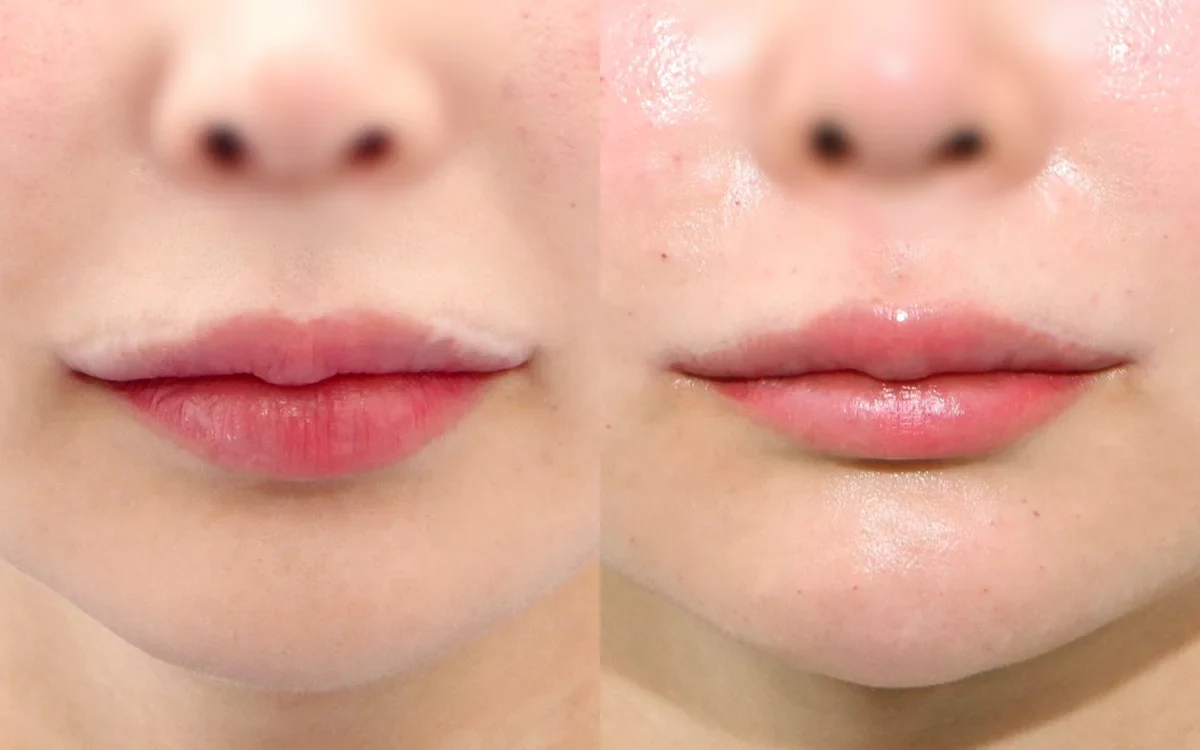
The corners of your mouth are the first thing that defines how your smile reads. If you've been troubled by an unnatural result after a first surgery, Dr.Tak begins by analyzing exactly what created that unnaturalness, then redesigns a natural smile line. We perform only the correction you genuinely need—never unnecessary procedures.
Who This Is For
- Those whose lip corners are lifted too high, looking unnaturally 'Joker'-like
- Those whose corner tips look blunt and forced, like a square box
- Those whose lip corners stay lifted even with a neutral expression, feeling awkward
- Those left with asymmetry in the height or shape of the left and right corners
- Those with lip corner scars that stand out or feel tight
- Those whose results were insufficient, or who have drooped again over time
Why Lip Corner Revision Is More Difficult
The corner of the mouth is an area where the muscle that lifts the corner (levator anguli oris), the muscle that pulls it down (depressor anguli oris, or DAO), and the mucosa and skin are all intertwined. In a site that has already been operated on, scar tissue and adhesions are added on top, so it requires a far more meticulous approach than an initial surgery. Because a difference of 0.5 mm can change the entire impression of your smile, revision demands a higher level of analysis and technical skill. As a specialized clinic that has focused intensively on the lip corners and lips, Dr.Tak Plastic Surgery approaches this challenge with deep, accumulated experience.
What We Correct, and How
Problems from a previous surgery call for different approaches depending on the type.
- Overcorrection ('Joker' mouth): We ease lip corners that have been lifted too high and bring them back into harmony with the upper lip line. We also adjust the balance between the muscle that lifts the corner and the muscle that lowers it (the depressor anguli oris).
- Square, box-shaped corners: We refine blunt, forced corner tips back into a sharp, natural curve.
- Left-right asymmetry: We redesign the height and shape of the left and right corners to restore symmetry.
- Prominent or tight scars: We excise the scar tissue and improve its position and direction with micro-suturing.
- Undercorrection or re-drooping: When the corners weren't lifted enough or have drooped again, we re-correct them naturally, taking the condition of the scar and muscle into account.
To ensure a natural look both at rest and when smiling, we consider the balance of the mucosa and muscle together.
Dr.Tak's Principles for Lip Corner Revision
- Precise analysis of scar and structure — We carefully diagnose the scarring at the previous surgical site and the state of deformation in the muscle and mucosa.
- One-on-one cause analysis consultation — We first clarify 'why the result became unnatural.' Operating again without understanding the cause only repeats the same problem.
- Setting realistic expectations — We honestly explain what can be reversed and what is difficult.
- Redesigning a natural line — We refine the scars with micro-suturing and re-establish left-right symmetry so the result looks natural both at rest and when smiling.
Timing for Revision
It is safest to perform the revision after the tissue has stabilized, at least six months following the initial surgery. Operating too early increases the risk of worsened scarring and insufficient blood flow.
Aftercare — It Determines Your Result
We prevent the incision line from widening with taping aligned to the direction of the incision. Because smoking delays wound healing, we recommend refraining from it for at least three months, and ideally six. To keep scars from hardening, regular massage—and, when needed, scar injections—can be combined.
Honest Words on the Expected Effects and Limits
Revision surgery comes with more demanding conditions than an initial surgery. Because of the scar tissue and tissue changes created by the previous procedure, there are cases where it is difficult to fully reverse the result to the extent desired, and some scarring may remain. Depending on the condition of the tissue, the correction may also need to proceed in stages rather than be completed in one session, and recovery speed and results vary from person to person. Dr.Tak accurately diagnoses the method of the first surgery and the state of the scarring, then proceeds only after honestly distinguishing—and clearly explaining—what can be reversed and what is difficult.