
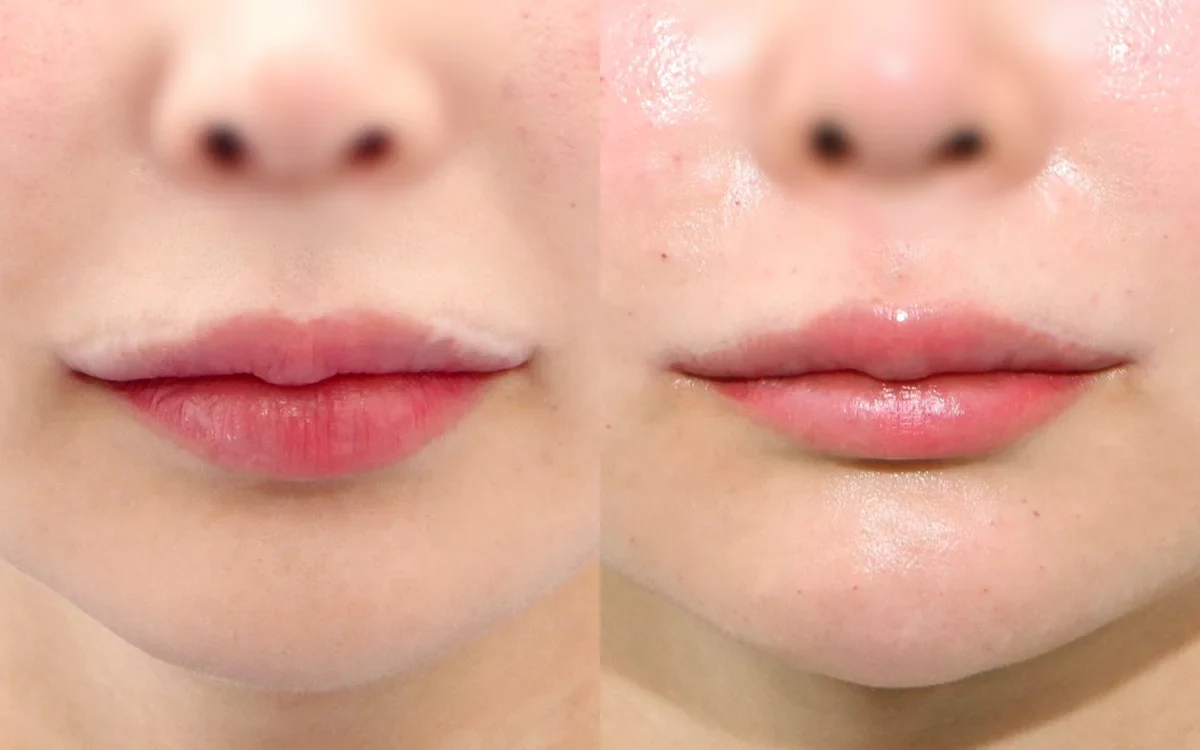
The outer philtrum (the outer portion of the upper lip) is a delicate area that defines the volume and shape of the mouth. Lateral Lip Lift is a procedure that draws out the rolled-in portion along the outer upper lip to add volume and to improve a triangular mouth shape or a short horizontal width. If you have been troubled by scarring, asymmetry, or an unnatural shape after a first surgery, Dr.Tak precisely analyzes the cause and redesigns the area into natural proportions. We perform only the correction that is truly necessary, with no unnecessary treatment.
Who This Is For
- Those whose outer philtrum was never improved as much as they had hoped, leaving the upper lip still thin or rolled in
- Conversely, those who were overcorrected, leaving the upper lip unnaturally thick or lifted
- Those left with asymmetry in the volume or shape between the left and right outer philtrum
- Those whose incision-line scar is conspicuous or has a tight, pulling sensation
- Those whose triangular mouth shape was not sufficiently improved or was left looking awkward
- Those whose mouth gives a different impression from the front than from the side, looking unbalanced
Why Lateral Lip Lift Revision Is More Difficult
The outer philtrum is a delicate border where the volume, line, and horizontal width of the upper lip all meet, so even a small scar or asymmetry shows prominently in the overall impression of the mouth. In an area that has already been operated on, existing scar tissue and adhesions add to the challenge, making a far more precise design necessary than in the initial surgery. As a clinic specializing in the philtrum and lips, Dr.Tak Plastic Surgery corrects the area with the natural connection of the entire upper lip in mind.
Which Problems We Correct, and How
Problems arising from a previous surgery are approached differently depending on the type.
- Undercorrection (insufficient improvement): When the upper lip is still thin or rolled in, we draw out the deficient portion further to restore volume and refine the line.
- Overcorrection (drawn out too far): When the upper lip is unnaturally thick or lifted, we soften it back to a natural thickness and line.
- Left-right asymmetry: We redesign the volume and shape on each side to match them symmetrically.
- Conspicuous or pulling scars: We excise the existing scar tissue and improve the position and direction of the scar with micro-suturing along the natural grain of the tissue.
- Residual triangular mouth shape: We refine the line extending toward the corners of the mouth to create a soft, natural mouth.
To ensure a natural result from both the front and the side, we also consider harmony with the entire upper lip line.
Dr.Tak's Principles for Lateral Lip Lift Revision
- Precise analysis of scarring and proportions — We make a detailed diagnosis of the scar condition along the previous incision line and any left-right asymmetry.
- One-on-one cause-analysis consultation — We first clarify whether the issue is undercorrection, overcorrection, or asymmetry. Operating again without knowing the cause only repeats the same problem.
- Setting realistic expectations — We honestly explain the range of improvement that is achievable.
- Micro-suturing — We also address the position and direction of the incision-line scar to minimize any trace.
Timing of the Revision
It is safest to perform the revision after the tissue has stabilized, at least six months after the initial surgery. Pushing ahead before the scar has matured can leave the result unstable.
Postoperative Care — It Shapes the Result
Because the area around the lips moves a great deal when speaking and eating, taping care is especially important. Since smoking delays wound healing, we recommend abstaining from smoking for at least three months, and ideally for six. To keep the scar from hardening, periodic massage and, if needed, scar injections can be combined as part of care.
An Honest Word on the Expected Results and Limitations
A revision involves more demanding conditions than an initial surgery. Because of the scar tissue and tissue changes created by the previous surgery, there are cases where it is difficult to achieve complete improvement to the extent desired, and some scarring may remain. When there is a large difference in the bony structure or soft tissue between the two sides, there may be limits to achieving perfect symmetry, and depending on the condition of the tissue, the procedure may need to be carried out in stages. Recovery speed and results vary from person to person. Dr.Tak accurately diagnoses the method of the first surgery and the condition of the scarring, then honestly distinguishes between what can be improved and what is difficult before proceeding.