
I'm Not Angry — A Surgeon's Confession About Drooping Mouth Corners
"Why do you always look angry?" — When Your Face Betrays You
I hear this question every single day in my clinic. "Doctor, why do people say I look angry even when I'm smiling?" In my early years of practice, this question simply saddened me. Now, every time I hear it, it reminds me why I chose this work. Drooping mouth corners are not merely a cosmetic issue — they are a form of emotional betrayal, where an expression you never intended becomes permanently etched on your face.
Many patients who find their way to our clinic have been carrying this story in their hearts for a long time. "They told me I look unfriendly at work." "Everyone says I look tired, but I feel completely fine." "My corners were fine when I was young, but they seem to droop more with age." When I hear these words, I think about how long each person has been fighting against this expression. Drooping mouth corners may sound like a small thing, but over ten years of clinical practice have taught me just how heavy a weight it truly is.
I'm writing this today for one reason: to share the things that are hard to find through a simple search — about drooping mouth corners and corner mouth lift surgery. This isn't to push you toward surgery. It's to give you the information you need to make a truly informed decision. If you have questions, you can reach us anytime through the live consultation at drtakprs.com.
📞 Start now → orange icon at the bottom right of drtakprs.com
1. Why Do Mouth Corners Droop? — The Muscle Rebellion
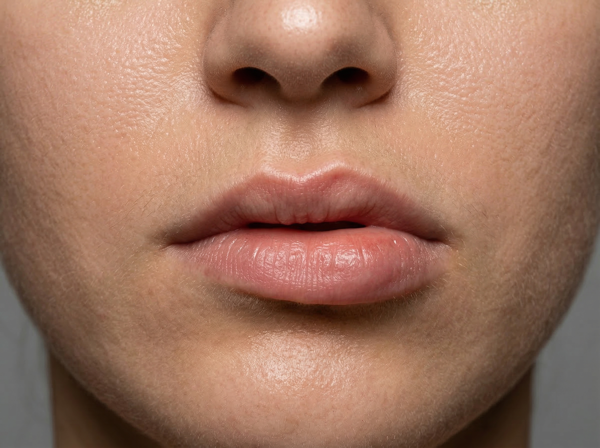
Why do mouth corners droop? I call this the "muscle rebellion." The direction your mouth corners point is not determined by bone or skin — it is determined by a constant tug-of-war between two muscle groups beneath the surface. When the balance between the muscles that lift the corners upward (levator group) and those that pull them downward (depressor group) is disrupted, drooping mouth corners are the result.
In my clinical experience, I most frequently encounter three main types:
① Congenital muscle imbalance — The depressor muscles have been dominant since birth. In my experience, these patients have often been hearing "why do you always look dissatisfied?" since their early twenties. It is also not uncommon to find other family members with a similar mouth corner shape.
② Age-related soft tissue descent — Starting in the forties, skin and fat layers descend under gravity, and the mouth corners progressively droop. In consultations, patients who say "it was fine before, but it suddenly got much worse over the last two or three years" often fall into this category. The loss of skin elasticity and the descent of cheek fat work in combination.
③ Structural facial type with relative drooping — When surrounding structures such as cheekbones, cheeks, and nasolabial folds have descended or become prominent relative to the lip position, the mouth corners can appear lower. In these cases, corner mouth lift alone may not be sufficient, and I honestly tell patients that a combined approach may be more appropriate.
📍 Bottom line: Drooping mouth corners do not have a single cause. Identifying which type you have before surgery determines 70% of the outcome.
2. How Corner Mouth Lift Works — My Approach
How does corner mouth lift surgery actually work? When I explain this procedure to patients, I always use the phrase "redistribution of force." This is not simply cutting and lifting the skin at the corner. It involves weakening the depressor anguli oris muscle that pulls the corner downward, while simultaneously restructuring the tissue so that the lifting forces act more effectively.
There are two things I focus on most when I operate:
① The incision line position — The incision is made along the vermilion border, the natural boundary between the lip and the surrounding skin, right at the mouth corner. I design this incision line to align as closely as possible with the natural lip contour. The key is ensuring the scar can remain hidden within the natural shadow of the lip border. Even a slight deviation from this boundary makes the scar visible. This is precisely why we invest significant time in the design phase.
② The direction and angle of lift — Rather than simply pulling the corner "upward," lifting it diagonally toward the outer corner of the eye creates a natural smile line. To achieve a result that looks effortlessly happy rather than forced, I individually calculate the angle and extent of lift based on each patient's facial golden ratio.
📍 Bottom line: Corner mouth lift is a "lifting" procedure, but the direction and degree of lift determine how natural the result appears.
3. An Honest Conversation About Scarring — My Most Asked Question
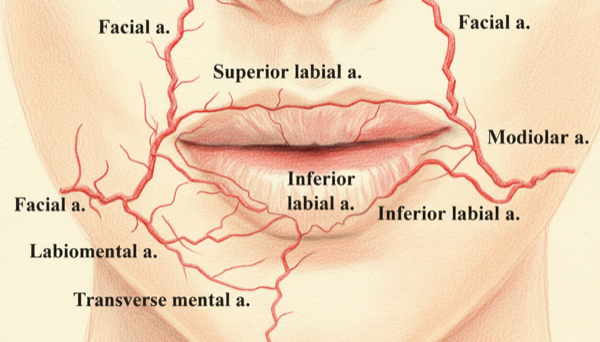
"Will there be a scar?" I receive this question multiple times every day. Let me be straightforward. Since corner mouth lift involves an incision, I cannot promise there will be no scar at all. However, in my experience, with the right incision line design and suturing technique, scarring can be managed to the point where it is barely visible at normal conversational distances.
When I analyze cases in my clinical practice where scarring was noticeable, I consistently find three common factors:
① The incision line deviating from the vermilion border — When the incision is placed above the border on the facial skin, the scar becomes exposed against the color contrast between the lip and surrounding skin. This is the most common cause of the so-called "Joker lips" complication. In revision surgery cases at our clinic, this cause accounted for more than half.
② Suturing only at the skin surface — If the muscle and dermal layers beneath the skin are not properly sutured, post-operative tension concentrates on the surface scar and causes it to widen. We always perform multi-layer closure.
③ No post-operative scar care — From the time of suturing through suture removal, and for the six months that follow, the final scar outcome is determined. Our clinic operates a 6-month post-operative care protocol.
✅ Scar Safety Checklist
✅ Confirm incision follows the vermilion border
✅ Confirm multi-layer closure (muscle layer + dermis + skin)
✅ Confirm 6-month post-operative care protocol is included
✅ Confirm surgery is performed directly by a board-certified plastic surgeon
📍 Bottom line: Surgery accounts for 50% of the scar outcome; aftercare is the other 50%. Always confirm that post-operative management is included in your program.
Section 4. Who Is a Good Candidate? — My 10-Year Clinical Criteria
In my practice, I have specific criteria that lead me to feel "corner mouth lift would genuinely help this patient." I also have criteria that make me feel "a different approach would serve this patient better." I do not consult with patients in order to recommend surgery — I consult to help them find the best choice available to them. I consider this distinction important.
From clinical experience, corner mouth lift is well-suited when: the corners are angled more than 3 degrees below the horizontal at rest; the corners are clearly lower than the lip center when viewed from the front; the drooping is caused by congenital muscle imbalance rather than aging; or Botox and filler attempts have not produced satisfying results. Conversely, corner mouth lift alone may not be sufficient in cases involving protruding jaw, overall midface descent as the primary cause, or relative drooping due to reduced cheek fat volume — in these cases, combined approaches tend to yield better outcomes.
📍 Bottom line: "Drooping mouth corners = corner mouth lift" is not always the equation. Understanding the cause and degree of drooping must come first.
5. Surgery vs. Non-Surgery — Which Option Suits You?
| Comparison | Corner Mouth Lift | Lip Corner Filler | Botox | Thread Lift |
|---|---|---|---|---|
| Duration of effect | Semi-permanent | 6–12 months | 3–6 months | 6–12 months |
| Immediate results | Moderate (after swelling subsides) | Immediate | After 2 weeks | Immediate |
| Procedure time | 60–90 min | 15–30 min | 10–15 min | 30–60 min |
| Recovery period | 2–4 weeks | 1–3 days | 1–2 days | 3–7 days |
| Scarring | Micro scar | None | None | None |
| Structural correction | ✅ Possible | ❌ Difficult | ❌ Limited | ❌ Difficult |
| Effective for congenital drooping | ✅ Very suitable | Limited | Limited | Limited |
| Re-treatment needed | No | Every year | Every 6 months | Every year |
| Long-term cost | One-time investment | Accumulating | Accumulating | Accumulating |
💡 I always show this comparison table to my patients — not to declare one method "better," but to help us think together about which approach fits their individual situation. If the drooping is mild or surgery feels like too large a step, I actively encourage starting with non-surgical options first.
📍 Bottom line: It is not about which method is superior — it is about which choice fits your situation right now. Accurate diagnosis must always come first.
Start Your 1:1 Personalized Consultation
✅✅ Drooping mouth corner consultations are available at Dr. Tak Plastic Surgery.
✅✅ We first identify your type and cause of drooping.
✅✅ We review all surgical and non-surgical options together.
✅✅ All consultations are conducted directly by a board-certified plastic surgeon.
📲 drtakprs.com → orange icon at the bottom right → free live consultation
6. Scar Management — The 6 Months After Surgery Are the Real Surgery
I always tell my patients: "I perform the surgery, but we create the scar together." Post-operative scar care after corner mouth lift is not merely a recommendation. In my clinical experience, even with identical surgical technique, the final scar outcome can differ significantly based on how well post-operative care is followed.
When I analyze cases where scarring became noticeable, the most common reasons are:
① Stopping care after suture removal — Suture removal at days 5–7 is only the beginning of scar maturation. The following 3–6 months is the critical window during which the scar matures and fades.
② Failing to manage sun exposure — If the incision area is exposed to UV rays within 3 months of surgery, hyperpigmentation develops and makes the scar more visible. I always advise patients to apply SPF 30+ sunscreen daily without exception.
③ Neglecting silicone tape and gel use — Our clinic recommends using silicone products for 1–3 months after suture removal. Silicone maintains moisture in the scar tissue and suppresses excessive collagen proliferation.
📍 Bottom line: Undergoing surgery without a 6-month scar care program is like building a house without putting on the roof.
7. A Realistic Recovery Timeline — The First Two Weeks Matter Most
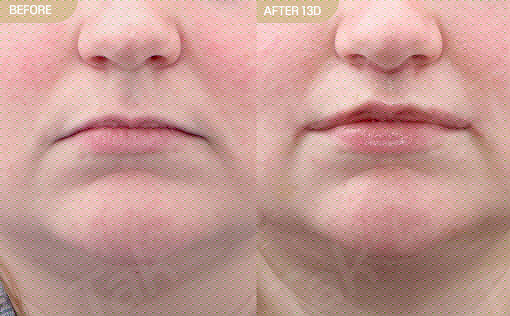
Let me give you an honest picture of recovery after corner mouth lift. One of the things that surprises patients most is "more swelling than expected." Because the area around the mouth has a rich blood supply, significant swelling and bruising are normal during the first 1–3 days after surgery. I always explain this clearly before the procedure — it is not an alarming sign; it is a normal part of healing.
| Recovery Stage | Timeframe | Key Changes | Daily Life |
|---|---|---|---|
| Early | Days 1–3 | Swelling peaks, bruising begins | Staying home recommended |
| Initial | Days 4–7 | Sutures removed, swelling begins subsiding | Manageable with mask |
| Middle | Weeks 2–3 | Swelling reduced ~70%, bruising resolves | Social activities possible |
| Late | Months 1–3 | Scar matures, appearance naturalizes | Fully normal |
| Final | Months 3–6 | Final result confirmed | — |
I call the first two weeks the "investment period." Following cold compress instructions, staying hydrated, avoiding alcohol and smoking, and refraining from exaggerated facial expressions during this time significantly accelerates recovery. In my clinical experience, patients who manage this period well see swelling resolve 20–30% faster than those who do not.
📍 Bottom line: Recovery varies by individual, but with proper post-operative care, returning to social life within 2–3 weeks is achievable.
8. Corner Mouth Lift vs. Lip Filler — A Deep Comparison of 9 Factors
| Comparison | Corner Mouth Lift | Lip Corner Filler |
|---|---|---|
| Duration of effect | Semi-permanent (years to permanent) | 6–12 months |
| Structural correction | ✅ Root cause addressed | ❌ Volume compensation only |
| Congenital drooping | ✅ Effective | Limited |
| Age-related drooping | ✅ Effective | ✅ Effective |
| Recovery discomfort | Moderate (2–4 weeks) | Low (1–3 days) |
| Scarring concern | Micro scar | None |
| Re-treatment needed | No | Every year |
| Long-term cost | One-time investment | Recurring cost |
| Natural smile expression | ✅ Structurally natural | May look unnatural during expression |
💡 The most common guidance I offer from clinical experience: "If the drooping is congenital and structural, surgery tends to be the better choice; if it is age-related or you want supplementary improvement, filler may be more appropriate." Either way, making a decision without an accurate diagnosis often leads to disappointment.
📍 Bottom line: Corner mouth lift and filler are not competing alternatives — they have different indications.
9. Why Dr. Tak Plastic Surgery? — A Decade of Lip and Philtrum Specialty
🏥 I have spent over 10 years researching and operating exclusively in the lip and philtrum area. I believe that even a single corner mouth lift requires a complete understanding of the entire perioral anatomy. Corner mouth lift may look simple, but without a precise understanding of the muscular, neural, and vascular structures around the mouth corner, achieving the desired outcome is genuinely difficult.
🏥 Four reasons to trust Dr. Tak Plastic Surgery:
🏥 10+ years operating as a dedicated lip and philtrum specialty clinic
🏥 Google Reviews 190+, 5-star average (as of 2026)
🏥 All surgeries performed directly by a board-certified plastic surgeon — no delegation
🏥 6-month post-operative scar care protocol included with every surgery
💬 "To make people smile."
This is why I have stayed at this work for ten years.
📍 Bottom line: Expertise and trust are not proven by advertising — they are proven by results. We invite you to verify this for yourself.
Dr. Tak 4S Patient Care System — People First, Not Just Surgery
I do not believe that the moment you leave the operating room is the end of our relationship.
Solution
I first take the time to accurately identify each patient's specific type and cause of mouth corner drooping. The surgical method and design differ depending on whether the cause is congenital muscle imbalance, age-related soft tissue descent, or structural factors. Every surgery is built on an individually customized design.
Support
The person who best understands the anxiety that follows surgery is the surgeon — me. Our clinic operates a 24-hour contact channel after surgery, and our specialist coordinators respond promptly to all questions about swelling, pain, and scarring. You do not need to face recovery alone.
Scar Care
The final result of corner mouth lift is determined by scar management. We provide a step-by-step scar care protocol from suture removal through six months.
| Period | Care Content |
|---|---|
| Right after suture removal | Protective scar tape application (2 weeks) |
| Weeks 2–4 | Begin silicone gel application |
| Months 1–3 | Silicone tape + intensive UV protection |
| Months 3–6 | Hyperpigmentation prevention cream + periodic check-ins |
| After 6 months | Final outcome evaluation + additional care if needed |
Service
I believe surgical results should shine in daily life. Not just stepping out of the hospital after surgery, but the moment when a patient returns to everyday life and can smile comfortably — that is what I consider our responsibility. Treatment is not completed on the operating table; it is completed within the patient's life.
10. Current Consultation Programs
📌 Precision Diagnosis Consultation for Drooping Mouth Corners
We offer precision diagnosis consultations for those concerned about drooping mouth corners. This includes classification of your drooping type, comparison of surgical and non-surgical options, and a personalized simulation.
📌 Real Model Event (Currently Accepting Applications)
We are recruiting real models to share their before-and-after journey. Open to influencers and general applicants. Please inquire during your consultation for details.
📌 Online Pre-Consultation → In-Clinic Fast Track
Completing an online consultation first allows us to expedite your diagnostic evaluation on the day of your in-person visit.
📞 Consult now → orange icon at the bottom right of drtakprs.com
For More Information — Official Channels
🌐 Website: drtakprs.com — start your drooping mouth corner consultation
📝 Blog: Detailed corner mouth lift case reviews (Dr. Tak blog at drtakprs.com)
📹 YouTube: Dr. Tak surgical process videos (search "닥터탁성형외과")
7 Things to Clarify Before Making Your Decision
I always tell patients: "If you come in having already thought through these seven things, our consultation goes much deeper."
✅ When your mouth corners began drooping (congenital vs. age-related)
✅ Previous treatments you have tried (Botox, filler, etc.) and their results
✅ Your biggest concern about surgery (scarring / unnatural result / recovery time)
✅ The degree of change you expect (subtle improvement vs. noticeable transformation)
✅ How long you can step back from social life during recovery
✅ Any other procedures you are considering combining (philtrum shortening, lip surgery, etc.)
✅ Three specific questions you want to make sure to ask during consultation
Frequently Asked Questions (FAQ)
Based on the questions we receive most frequently at Dr. Tak Plastic Surgery (sourced from Naver Q&A and Google "People Also Ask").
Q1. Is corner mouth lift painful during surgery? What kind of anesthesia is used?
Because the procedure is performed under local anesthesia, pain during surgery is minimal. You may feel a slight pinch during the anesthetic injection, but I use buffered anesthesia optimized for facial procedures, which makes even that moment as comfortable as possible. In my clinical experience, the vast majority of patients say "it was far less painful than I expected." Mild discomfort may occur as the anesthesia wears off afterward, and we prescribe pain medication accordingly.
Q2. How long does swelling last after mouth corner surgery, and when can I return to work?
Swelling peaks around days 1–3 and gradually subsides. In my experience, most patients can resume daily activities within 5–7 days while wearing a mask, while returning to work without a mask typically takes around 2–3 weeks. If you have an important event or meeting coming up, I recommend allowing at least 4 weeks. Applying cold compresses immediately after surgery and avoiding alcohol and smoking significantly impacts how quickly you recover.
Q3. How much does corner mouth lift cost? Is it covered by insurance?
Corner mouth lift is an elective cosmetic procedure and is not covered by health insurance. Cost varies depending on the degree of drooping, the scope of surgery, and any accompanying procedures, so we provide exact pricing after a 1:1 consultation. I tend to prioritize the minimum precise correction necessary for each patient's current situation. You can get a general sense of the price range in advance through the online consultation at drtakprs.com.
Q4. Will the scar from mouth corner surgery be very noticeable? I'm worried about the "Joker lips" effect.
The "Joker lips" concern is one of the questions I receive most often. This complication occurs when the incision deviates from the natural lip border (vermilion border) — which is why the placement of the incision is the single most critical factor. We use precision incision along the vermilion border combined with multi-layer closure, positioning the scar within the natural shadow of the lip edge. With proper management, in my clinical experience, the vast majority of patients find the scar is not noticeable at normal conversational distances by the 6-month mark.
Q5. Who is a good candidate for corner mouth lift, and who is not?
Corner mouth lift is most effective for patients with congenital muscle imbalance — where the corners structurally point downward. On the other hand, if overall facial structure has descended or prognathism is present, achieving the desired result from corner mouth lift alone can be difficult, and a combined approach is more appropriate. If the drooping is mild or you are considering a first procedure, I also recommend confirming the effect with filler or Botox first. In any case, the most important first step is identifying your type of drooping through a 1:1 consultation.
Dr. Tak Plastic Surgery | Korea's Dedicated Lip & Philtrum Specialty Clinic
"To make people smile."