
"I heard lip reduction leaves scars" — I hear that concern every single week
You want the surgery, but the thought of visible scars is making you hesitate. That's exactly what I hear most in my consultation room. "Doctor, will people be able to tell I had lip surgery?" I get this question almost every week — honestly, nearly every day.
And let me be direct with you: that question is an important one. Worrying about scars means you're thinking seriously about your results, and those are exactly the patients I want to give a thorough answer to. Not just "it'll be fine," but why it'll be fine — and when it might not be.
In this post, I'll walk through the most common concerns I receive about lip reduction scars and recovery. I'll cover the medical reasons scars typically stay hidden, how long healing takes, and the honest situations that require more care. I've been doing this in Korea for over 15 years, and I'd rather give you the full picture than a reassuring oversimplification.
Three Reasons Oral Mucosa Is Different From Skin — Why Scarring Is Minimal
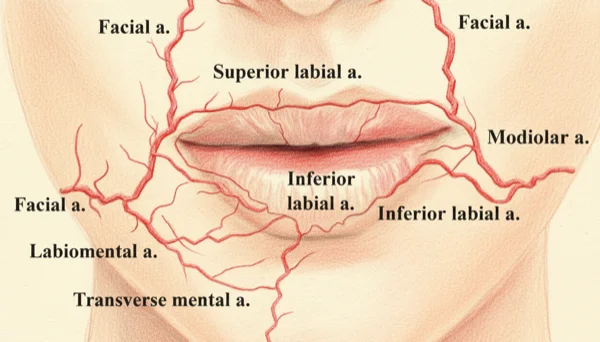
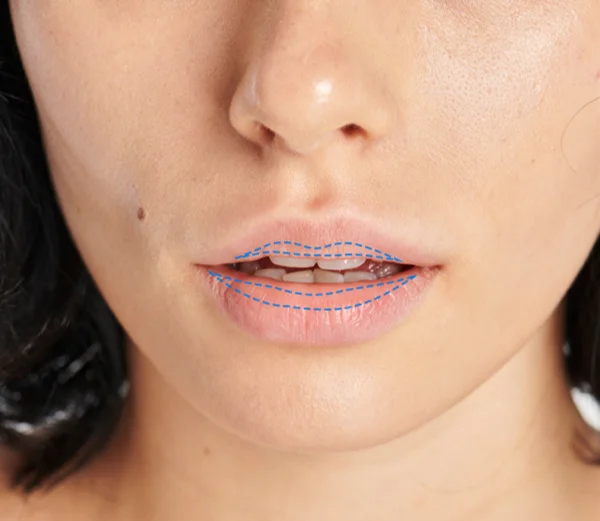
The incision in lip reduction surgery doesn't happen on the outer skin of your lip. I always make my incisions through the oral mucosa — the moist inner tissue of the lip. That distinction is everything. And this mucosa differs from skin in three fundamental ways.
① Blood supply — The oral mucosa receives approximately 3 times more blood flow than facial skin. Greater blood flow means faster delivery of nutrients and immune cells. Healing is fundamentally different here. When patients ask me "why does my lip heal so quickly?", this is my answer. It's mucosa, not skin.
② Cell regeneration speed — The mucosal cell cycle is approximately 7–10 days. Facial skin regenerates over roughly 28 days — nearly three times slower. This rapid renewal closes the suture line quickly and reduces the time window for scar tissue to form. Many patients reach the two-week mark and say "is this really the lip I had surgery on?" That's not unusual at all.
③ Placement of the incision line — I design my incision along the wet-dry junction of the lip — the natural fold where inner mucosa transitions to outer lip surface. This anatomical boundary means that once healed, the suture line sits within the lip's natural crease. Even if fibrous tissue remains, it sits where it simply isn't visible from the outside. That placement difference is what separates a clean result from one that draws attention.
Internal vs. External Incision — The Approach You Choose Determines the Scar
There are two main approaches to lip reduction. I explain this difference in every consultation, and most patients tell me they had no idea the options were so different. Knowing this changes everything.
| Comparison | Internal Mucosal Incision | External Incision (Vermilion Border) |
|---|---|---|
| Location | Inner mucosal surface | Just outside the vermilion border |
| Scar visibility | Hidden inside — barely visible externally | Scar may remain at lip border |
| Best for | Overall volume reduction, mucosal excess | Lip eversion or protrusion correction |
| Recovery | ~1–2 weeks (eating manageable early on) | ~2–3 weeks (more careful management) |
| Swelling | Moderate — 70% resolved within 2 weeks | Can persist longer with eversion correction |
| Scar management | Natural mucosal healing + 6-month monitoring | Laser and injection treatments often recommended |
| Dr. Tak preference | ✅ Most cases | ⭕ When eversion/protrusion correction needed |
📍 Bottom line: For patients whose main concern is scarring, I choose internal mucosal incision in the vast majority of cases. If the goal is simply volume reduction without structural correction, external visible scarring is effectively a non-issue.
Start Your 1-on-1 Consultation Today
✅✅ We compare internal vs. external incision based on your lip shape and thickness — and explain which suits you
✅✅ We give an honest opinion regardless of whether surgery is the right choice for you
📲 Visit drtakprs.com — chat icon at the bottom right → connect directly
How Long Does the Scar Keep Changing? — 6-Month Recovery Timeline
Many patients see photos of themselves right after surgery and panic. I completely understand that anxiety. But the healing trajectory of oral mucosa is predictable. I walk through this timeline in every consultation. Knowing what to expect makes the recovery experience completely different.
| Timeframe | Status | What to Watch |
|---|---|---|
| Day 0 – Day 3 | Significant swelling. Suture line appears red. | Avoid spicy foods; no smoking. Intermittent ice. |
| Day 4 – Day 7 | Swelling reduced by 50%. Eating becoming manageable. | Soft foods. Sutures begin absorbing. |
| Week 2 | 70%+ swelling resolved. Return to daily activities. | Begin sun protection. Light makeup acceptable. |
| Month 1 | Suture area feels firm — a normal response. | Avoid pressure; don't stretch the lip. |
| Month 3 | Firmness largely resolved. Natural movement returning. | Continue scar management cream. |
| Month 6 | Final result. Suture line nearly invisible in most cases. | Final assessment. Corrective treatment if needed. |
💡 The most common concern I hear at the one-month mark is "the suture area feels hard." This is not a keloid — it's the normal fibrosis stage of mucosal healing. In most cases it resolves by month three. I only need injection treatment in fewer than 10% of my patients.
Being Honest — There Are Cases Where Scars Do Show
You should know this before deciding. Lip reduction doesn't guarantee invisible scars for everyone. Patients with darker skin tones, keloid-prone constitutions, prior lip surgery history, or habits that repeatedly stress the suture area carry a higher risk of visible scarring. I make it a point to identify these factors in every consultation. The question I ask myself first is: "Is surgery the right answer for this person, right now?" That's been my standard for over 15 years.
Post-operative care also meaningfully shapes the final scar outcome. Sun protection, consistent scar cream application, and the one-month follow-up — skip any of these and results can differ even from the same surgery. Surgery alone is never the whole story.
190+ Google Reviews, 5 Stars — Why Patients Trust Dr. Tak in Korea
I've been running a specialized lip and philtrum clinic in Korea for over 15 years. The most valuable thing I've learned is, paradoxically, knowing when not to operate. Overcorrection produces unnatural results, and unnatural results are what bring patients back to my consultation room from other clinics. I always tell patients: my goal isn't the maximum I can remove — it's the optimal amount for a natural result.
🏥 Why patients trust us:
- 190+ Google reviews maintaining a 5-star rating
- 15+ years specializing in lip and philtrum procedures in Korea
- Hands-on experience across lip reduction, philtrum reduction, corner lift, and lip augmentation
- 6-month post-operative scar monitoring system
💬 "To make people smile — everything we do is in service of that. If the smile doesn't look natural, I don't call it a success."
The Dr. Tak 4S Patient Care System — Managing Scar Concerns Together
We focus on people, not procedures
Solution
We begin by analyzing the structural cause of your lip volume and shape. Whether it's simple excess, mucosal overgrowth, or accompanying eversion determines the incision method and how much to remove. The starting point is finding the right approach for you.
Support
From surgery day through recovery, we respond promptly to questions. A quick response to "is this normal?" — that's what defines the recovery experience. One-week, two-week, and one-month check-ins are standard at our clinic.
Scar Care
| Timeframe | Scar Management |
|---|---|
| Post-op – Week 2 | Wound care, suture protection, begin sun protection |
| Week 2 – Month 1 | Begin topical scar cream |
| Month 1 | Follow-up: assess suture firmness; injection if indicated |
| Month 3 | Firmness check + decide on laser treatment |
| Month 6 | Final outcome evaluation. Corrective treatment if needed. |
Service
I don't want the relationship to end when surgery does. We keep a channel open for patients to check any changes during recovery. If scar concerns remain six months later, come back and we'll assess together.
For More Information — Official Channels
🌐 Dr. Tak Plastic Surgery official site: drtakprs.com
📝 Lip & philtrum specialty blog: clinical cases and surgeon columns
📹 YouTube channel: before & after and recovery footage
7 Things I'd Like to Clarify Before You Decide on Surgery
✅ Have you identified whether the issue is volume/thickness, or shape (eversion/protrusion)?
✅ Do you have keloid tendency or a history of prior lip surgery?
✅ Have you explored non-surgical options (Botox, fillers) thoroughly?
✅ Have you picked a timing where two weeks of recovery won't disrupt your life?
✅ Are you prepared to commit to consistent scar management?
✅ Is a natural result your priority over maximum volume reduction?
✅ Have you consulted with multiple clinics to compare approaches?
Frequently Asked Questions (FAQ)
The most common questions about lip reduction scarring and recovery at Dr. Tak Plastic Surgery.
Q1. Does lip reduction surgery hurt? What kind of anesthesia is used?
I perform lip reduction under local anesthesia. The procedure takes approximately 30 minutes. Apart from a brief sting at the injection point, there's no pain during surgery. There's typically some throbbing as anesthesia wears off, well managed with oral analgesics. The comment I hear most often is "it was so much less painful than I expected."
Q2. How long until I can return to my normal routine?
I generally advise 5–7 days. By that point, 50–60% of swelling has resolved and eating is manageable. The lip looks genuinely natural around the two-week mark. If you have important appointments, allow at least two weeks from surgery.
Q3. How much does lip reduction cost in Korea? Is insurance applicable?
Lip reduction is elective cosmetic surgery, so insurance does not apply. Cost varies by incision method, extent of tissue removal, and any combined procedures — I provide a precise quote after consultation. What matters more to me than price is appropriateness. The most expensive outcome I see comes from patients who had surgery that didn't suit their lip anatomy at a cheaper clinic. The correction is far more complex.
Q4. What if my lips end up too thin or look strange? I'm scared the result will look off.
That fear is completely natural — and completely valid. The first thing I ask in every consultation is: "How much reduction are you looking for?" I use that as my reference point, then propose what I consider the appropriate range. Overcorrection is difficult to reverse. My goal is not maximum removable volume but the amount that creates the most natural result for your facial proportions. In my experience, the patients most likely to be unhappy with results are those who asked for maximum reduction upfront.
Q5. Is revision surgery possible? What if I don't like the initial result?
Yes, revision is possible. However, it's more complex to plan than the original procedure. We need to first assess prior suture lines and tissue changes, and wait until tissue has fully stabilized — generally at least six months post-operatively. More than half of the revision consultations I receive involve patients who had their original surgery elsewhere and are unhappy with the outcome. In those situations, I work with them to find the best path forward.
Dr. Tak Plastic Surgery | Korean Lip & Philtrum Specialist Clinic
"To make people smile — 사람들이 미소짓도록 돕는다"