
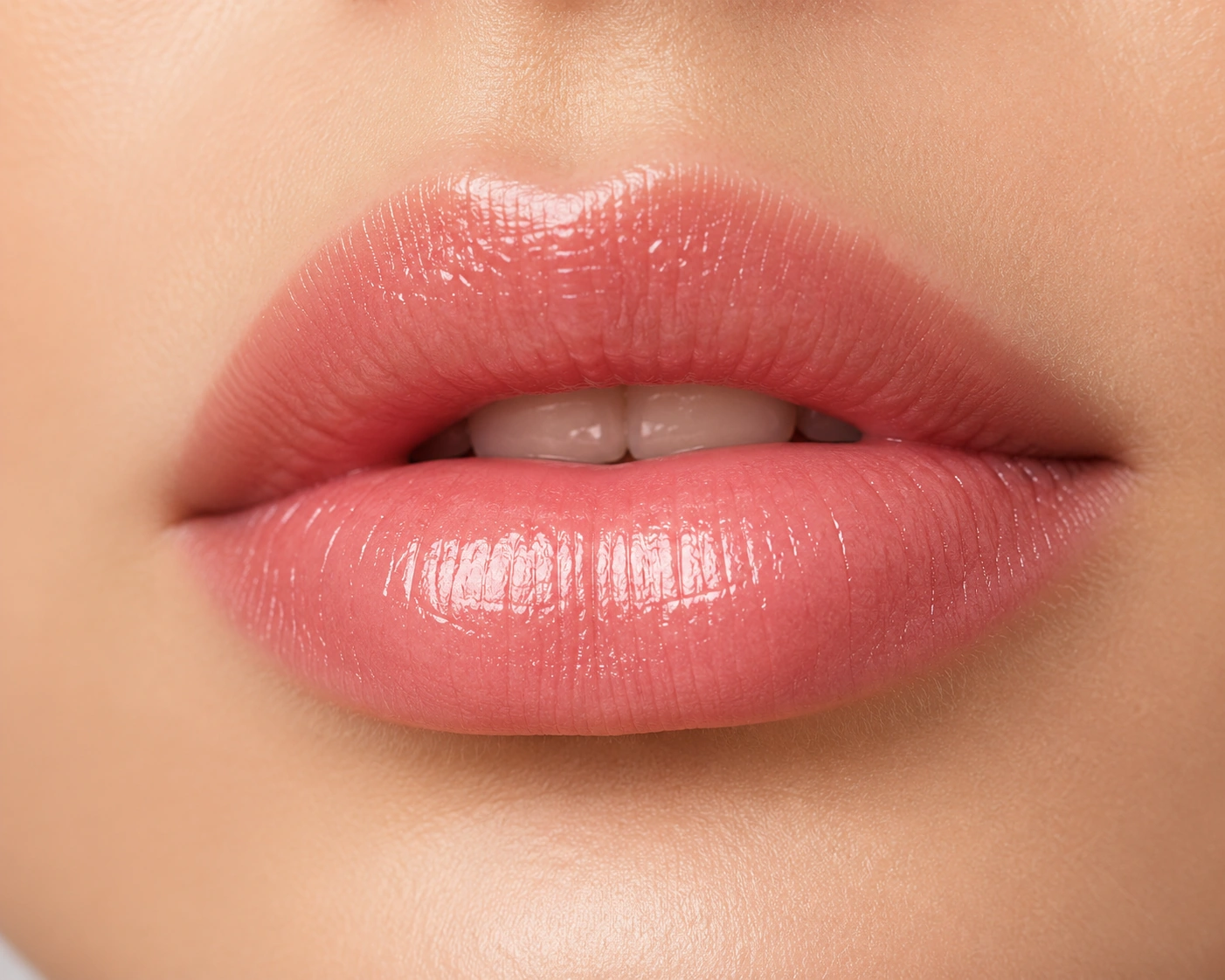
"I hate photos of myself" — I hear this every week at my Korean clinic
Most people first become aware of their philtrum because of a photo. You look older than your friends, or someone tells you that you look tired or expressionless when you're not smiling. The mirror seems fine, but the person in photos feels like a stranger. I hear this concern at my consultation desk every week — sometimes every day.
Here's what's interesting, though. Many people who feel their philtrum is long don't actually have a long philtrum. More often, it's the surrounding structures — the angle of the nasal tip, the thickness of the upper lip, the overall balance of the midface — that make the philtrum appear longer than it is. This is exactly why a medical approach matters.
Today I'll explain the anatomical mechanisms behind why a long philtrum creates an aged impression. Whether or not you're considering surgery, understanding your own philtrum from a medical perspective will be genuinely useful.
The Anatomy of the Philtrum — It's Not Just Skin
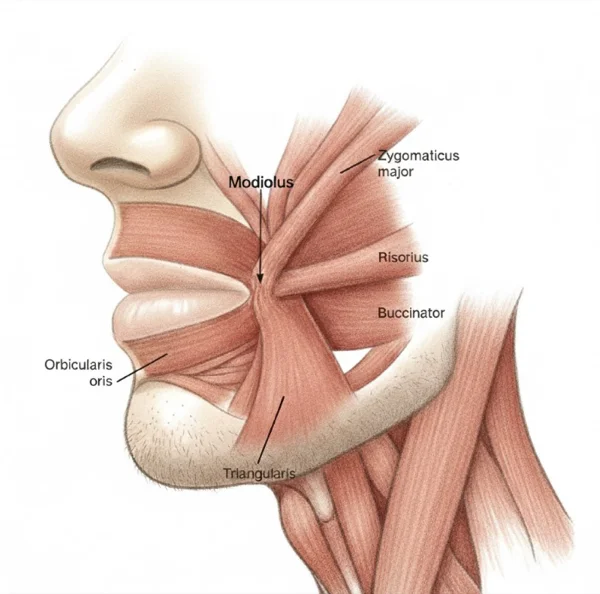
The philtrum runs from the base of the nose to the vermilion border of the upper lip. It looks like a simple patch of skin, but three key structures lie beneath it.
① Levator labii superioris alaeque nasi — This muscle runs from beside the nostril to the upper lip, lifting the lip upward when you smile. When it weakens or elongates, it becomes a direct cause of the philtrum appearing longer. The reason I always ask patients to smile during consultation is specifically to assess this muscle's function.
② Orbicularis oris — The circular muscle that surrounds the mouth. When its tone decreases, the upper lip droops downward and the vertical length of the philtrum increases visually. Because this muscle's condition influences which surgical approach is best, it's the first structure I evaluate.
③ Skin and subcutaneous fat layer — Philtrum skin is relatively thin with minimal structural support. As collagen decreases with age and subcutaneous fat migrates, this layer tends to elongate vertically. Once this process begins, it doesn't reverse on its own.
When all three act together, the philtrum creates more than a sensation of length — it creates a visual weight that pulls the entire face downward from the middle. That is the anatomical reason a long philtrum is so strongly associated with an aged appearance.
The Medical Standard for Philtrum Length — What Do the Numbers Mean?
"How long is too long?" is one of the most common questions I receive. Having a medical reference point helps you evaluate this objectively.
According to research accounting for ethnicity and sex (Farkas, 1984), the standard philtrum length for Korean women — measured from the nasal tip to the upper vermilion border — is approximately 11–13 mm. Within this range, the philtrum occupying roughly one-third of the midface height produces the most harmonious proportions.
| Philtrum Length | Clinical Classification | Impression |
|---|---|---|
| 8 mm or less | Short | Youthful, soft appearance |
| 11–13 mm | Standard | Balanced midface proportions |
| 15 mm or more | Long | Mature, expressionless tendency |
| 18 mm or more | Noticeably long | Tired, aged appearance |
These numbers are not absolute. Nasal tip height, upper lip thickness, and chin length must all be considered in relation to each other. I never judge by numbers alone. The same 15 mm looks longer on a low nasal tip and shorter on a fuller upper lip.
📍 Bottom line: The ratio the philtrum occupies within the midface, and its relationship to surrounding structures, matters more than its absolute length.
Why the Philtrum Gets Longer with Age — 3 Mechanisms
This is the core of today's post. The philtrum actually does get longer with age. This isn't just a perception — it's a measurable anatomical change.
① Collagen loss and reduced skin elasticity — After your twenties, collagen production decreases by approximately 1% per year. Because philtrum skin has minimal structural support, it is particularly sensitive to this change. Skin that loses its elasticity elongates under gravity, and the vertical philtrum length increases in real, measurable terms. Every time I compare photos of the same patient in their twenties versus fifties, the degree of change is striking.
② Progressive weakening of the levator labii muscle — This muscle lifts the philtrum upward. As it weakens, the philtrum drops, and the distance between the nasal tip and the upper lip appears to increase. At this stage, the philtrum doesn't just look longer — its actual length can increase by 2–4 mm. This is one reason regular use of facial muscles slows the pace of aging.
③ Loss of upper lip volume — As we age, the fatty tissue of the upper lip decreases and the lip thins. Even when the actual distance from nasal tip to lip border stays the same, a thinner lip makes the philtrum take up more visual space on the face. The philtrum hasn't grown — the lip has shrunk — but the philtrum appears more prominent. In these cases, upper lip volume restoration is often the right first step rather than philtrum reduction.
Because all three processes happen simultaneously, many patients over thirty who feel their face has "dropped" are primarily experiencing philtrum-related changes. But the correct treatment differs depending on which mechanism is driving the problem.
Start Your 1:1 Korean Philtrum Consultation Today
✅ Philtrum length and midface ratio analysis — honest assessment including whether surgery is needed
✅ We give you a straightforward opinion regardless of whether you choose surgery
📲 Official site drtakprs.com — chat icon at bottom right → live consultation
The Visual Mechanism Behind the "Tired Look"
When processing a face, the brain automatically compares three segments: forehead-to-eyes, eyes-to-nasal tip, and nasal tip-to-chin. The closer these three are to a 1:1:1 ratio, the more youthful and balanced the face reads. A longer philtrum stretches the middle segment and breaks this proportion.
More specifically, a long philtrum widens the space between the nasal tip and the upper lip's vermilion border, making the mouth appear lower on the face. When the mouth sits lower, the corners naturally point downward at rest — and that downward pull is the core reason a long philtrum reads as tired or worn out.
So the real problem isn't the length itself. It's the position of the mouth that length creates. Understanding this makes the direction of treatment far clearer.
The Anatomy of Upper Lip Lift Surgery — Why Incision Placement Decides Everything
The key to upper lip lift surgery (philtrum reduction) is not how much skin is removed. Where you incise and how you close determines the result.
The surgical principle is to remove a segment of skin beneath the nose and suture it closed to physically shorten the philtrum. But where that incision is placed changes everything.
| Incision Position | Advantage | Consideration |
|---|---|---|
| Just above the subnasal crease (central) | Scar hidden in nasal shadow; natural curve maintained | Precise bilateral symmetry required |
| Extended to alar base (lateral approach) | Full philtrum shortening + upper lip projection possible | Higher design complexity to avoid alar distortion |
| Below the subnasal crease | (No advantage) | Higher scar visibility; not recommended |
What I emphasize most is that the incision must align precisely with the natural subnasal crease. When it does, the scar is nearly invisible from the front. Even removing the same amount of skin, the naturalness of the result changes completely based on where the incision is placed.
One honest note: upper lip lift surgery is not right for everyone. In cases with protruding teeth, a low nasal tip, or an already-thin upper lip, shortening the philtrum alone may not produce the desired result — and can actually highlight awkwardness.
Surgery vs. Non-Surgery — Complete Comparison of Korean Philtrum Options
| Comparison | Upper Lip Lift (Incision) | Non-Incision Philtrum Groove | Upper Lip Filler | Botox |
|---|---|---|---|---|
| Actual philtrum shortening | ✅ Physical reduction | △ Visual reduction | △ Relative reduction | △ Mild effect |
| Duration | Semi-permanent | Relatively limited | 6–12 months | 4–6 months |
| Scarring | Micro scar (nearly invisible with care) | None | None | None |
| Recovery | 10–14 days | 2–3 days | 1–2 days | Same day |
| Anesthesia | Sedation or local | Local | Local | None or topical |
| Ideal candidate | Philtrum 15 mm+, want definitive result | Want projection, prefer no surgery | Thin upper lip making philtrum prominent | Mild case, want to try first |
| Combinable | Yes | — | Yes | Yes |
| Re-treatment | Possible | Possible | Possible | Possible |
| Cost range | Mid–high | Mid | Low–mid | Low |
📍 Bottom line: Don't decide based on cost or recovery time alone. Accurate analysis of your actual philtrum length, nasal tip angle, and upper lip thickness is needed to determine which approach will produce the most natural result.
What I Check First in Every Korean Consultation
I've specialized in lip and philtrum surgery in Korea for over 15 years, performing more than 600 philtrum-related procedures annually. And the first thing I do in every consultation is not measure the philtrum.
I look at the nasal tip angle, the direction of the nasolabial angle, the thickness and shape of the upper lip, and the tone of the orbicularis oris. Only after that do I measure the philtrum length and determine which approach will produce the most natural result. When this order is reversed, the philtrum gets shorter but the result looks off. That outcome is what I'm most careful to avoid.
Dr. Tak Plastic Surgery, Korea — 190+ Google reviews, 5-star average. The word that appears most consistently across those reviews is "natural." Dramatic or striking transformations are not my goal. Looking 5 or 10 years younger than before surgery, with no visible sign that surgery was done — that is the standard of our clinic.
💬 "The lips and philtrum move first — when you speak, smile, or show any emotion. Operating here means working with expression itself. That's why I always approach it conservatively and carefully."
Dr. Tak's 4S Korean Patient Care System — Long Philtrum Treatment, Start to Finish
Focused on people, not procedures
Solution
Comprehensive analysis of philtrum length and surrounding structures, followed by a customized surgical plan targeting maximum naturalness with minimum intervention. We recommend the most appropriate method for each patient — incision lift, non-incision groove, or filler — and propose a staged approach when multiple factors are involved.
Support
Full explanation of anesthesia, incision, and closure on the day of surgery. Swelling and pain management during recovery. Suture removal scheduling and aftercare guidance. You won't need to search the internet alone.
Scar Care
Post-operative scar management protocol — day of surgery through 6 months:
| Period | Management | Precaution |
|---|---|---|
| Day of surgery – Day 3 | Cold compress, minimize irritation | No direct friction over incision during cleansing |
| Day 4–10 | Ointment application, prep for suture removal | Scar tape not yet appropriate |
| Week 2 – Month 1 | Begin scar tape; daily SPF essential | Gentle cleansing only |
| Month 1–3 | Topical scar management products | Avoid strong sun exposure |
| Month 3–6 | Pigmentation settling; laser option available | Final result assessed at 6 months |
Service
The same medical team handles every stage — consultation, surgery, and recovery. No sudden handoffs to a different provider. No discrepancy between what was discussed and what happens.
Learn More — Official Channels
🌐 Official site: drtakprs.com
📝 Before & after cases and clinic blog: drtakprs.com/blog
📹 Surgery explanations and recovery videos: Dr. Tak YouTube channel
7 Things to Clarify Before Your Korean Philtrum Surgery Decision
✅ Have you measured whether your philtrum is actually 15 mm or longer?
✅ Have you checked whether the nasal tip angle or lip thickness is making it appear longer?
✅ Are you open to trying a non-surgical option (Botox or filler) first?
✅ Have you chosen a timing when 2 weeks of recovery won't disrupt your schedule?
✅ Are you prepared to follow a 6-month scar management program?
✅ Have you confirmed whether a protruding bite is involved and discussed its scope?
✅ Have you discussed realistic expectations for the result in consultation?
Frequently Asked Questions (FAQ)
The questions we hear most often at Dr. Tak Plastic Surgery Korea.
Q1. Will surgery hurt? How is anesthesia handled?
Upper lip lift surgery is performed under local or sedation anesthesia. With local anesthesia, there's a brief sting at injection, but once it takes effect there is essentially no pain during the procedure. In all my years of practice, very few patients have said the surgery itself hurt. What most find more uncomfortable is the swelling and tightness in the two to three days following surgery. Getting a good night's sleep the evening before makes a real, measurable difference to recovery.
Q2. How long is recovery? When can I return to work?
More than 70% of swelling subsides within 7–10 days. Sutures are typically removed on day 7. Patients who can wear a mask comfortably often return to work around day 5–7. That said, if you want a fully natural result, 1–3 months is the accurate recovery window for residual swelling to fully settle. For important events — graduation, a wedding — I recommend scheduling surgery at least 3 months in advance.
Q3. How much does Korean philtrum reduction cost? Is it covered by insurance?
Upper lip lift is a cosmetic procedure and is not covered by Korean health insurance. Costs vary significantly by clinic, surgical method, and scope, so exact figures are discussed in consultation. Incision lift, non-incision groove, and filler each carry different price points, and we walk through all options with expected outcomes side by side. Finding the right approach for your anatomy matters more than the cost figure.
Q4. Will there be a visible scar? I'm afraid people will know I had surgery in Korea
This fear is one I hear constantly, and I understand it completely. Honestly — if it's the incision method, there will be a fine scar. But when the incision aligns precisely with the natural subnasal crease and is closed carefully, it's nearly invisible from the front. Patients who follow the 6-month scar management protocol consistently achieve results where the scar is undetectable in normal face-to-face conversation at a 20–30 cm distance. The "done look" in this surgery comes from unnatural design, not from scars. That's exactly why incision placement matters so much.
Q5. Is my philtrum actually long? I genuinely don't know if surgery is needed
This is the most important question. Whether your philtrum is truly long, or whether surrounding structures (nasal tip height, lip thickness, chin length) are creating the appearance of length, cannot be determined without measurement and analysis. In consultation, I measure philtrum length in millimeters, analyze midface proportions and nasal tip angle, and give an honest answer about whether treatment is indicated. If it isn't, I say so. That is my principle.
Dr. Tak Plastic Surgery | Korea Lip & Philtrum Specialist Clinic
"To make people smile."