
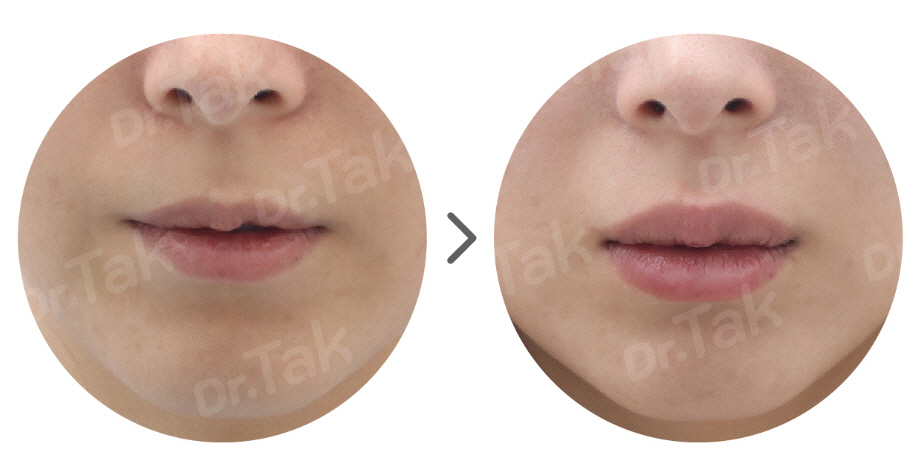
Worried About Thin Lips? — Top Questions About Korean Lip Augmentation Before Your Consultation
Do your lips look cold or expressionless even when you smile?
I hear this concern constantly at my clinic: "My lips are so thin that people tell me I look unfriendly even when I'm smiling." Many patients try lipstick for years before realizing cosmetics have their limits — and that's usually when they find their way to me at Dr. Tak Plastic Surgery in Korea.
The questions I receive most often are: "Should I get filler or surgery?" and "How do I know which Korean lip augmentation option is right for me?"
In this guide, I'll walk through the three main approaches — lip filler, lip fat grafting, and mucosal advancement surgery — compared across 5 practical criteria. My goal isn't to push one method but to help you make an informed decision before your consultation.
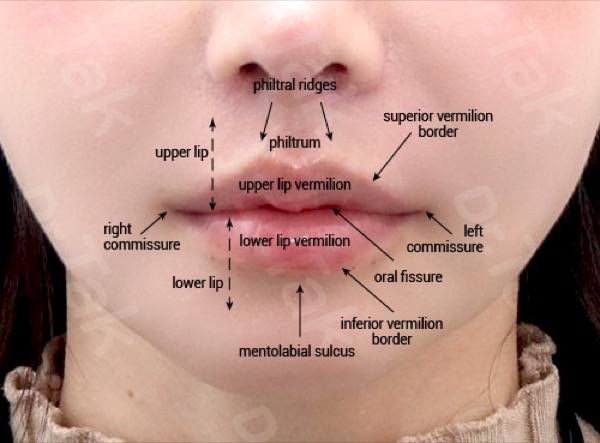
Why Do Lips Look Thin? — 3 Anatomical Reasons
The shape and volume of your lips aren't purely genetic. I explain this at every consultation because understanding the root cause is essential to choosing the right solution.
① Low or undefined vermilion border
When the lip border lacks definition, the lips appear thinner than they actually are. In my clinical experience, Korean patients often have a flat or low upper vermilion, creating an optical illusion of thinness beyond the actual tissue depth.
② Insufficient tubercle volume
The central raised area of the upper lip (the tubercle) gives lips their natural fullness from the front. When this area is flat, even average-sized lips look thin. Korean lip filler can provide immediate improvement; fat grafting offers longer-lasting natural volume.
③ Reduced mucosal show
When the upper lip mucosa rolls inward rather than outward, the lip looks dramatically thinner. This is a structural issue — adding volume alone won't fix it. Mucosal advancement surgery is the most effective approach in these cases.
I always identify which of these three factors is dominant before recommending a treatment path. The same "thin lip" complaint can require completely different solutions.
Filler, Fat Grafting, or Surgery — Compared by 5 Korean Lip Augmentation Criteria
| Comparison | Lip Filler | Lip Fat Grafting | Mucosal Advancement (Surgery) |
|---|---|---|---|
| Duration | 6–12 months | Semi-permanent (post-engraftment) | Permanent structural change |
| Procedure time | 15–30 min | 1–2 hours | 1–1.5 hours |
| Anesthesia | Topical cream | Local + sedation | Local + sedation |
| Recovery | 3–7 days | 1–2 weeks | 1–2 weeks |
| Natural appearance | ★★★☆☆ | ★★★★☆ | ★★★★★ |
| External scarring | None | Minor at harvest site | None (inside mucosa) |
| Repeat treatment | ~Yearly | Rarely needed | Not needed |
| Reversibility | Immediate (dissolving) | Difficult | Difficult |
| Cost level | Low | Medium | Medium–High |
| Best suited for | First-timers, subtle improvement | Own-tissue preference, moderate volume deficit | Structural mucosal inversion |
📍 Bottom line: For anyone trying Korean lip augmentation for the first time, I typically recommend starting with filler — it's reversible if you change your mind. Fat grafting is more natural and lasting but hard to adjust. Mucosal advancement delivers the most structural improvement but is a surgical procedure.
Start Your 1:1 Korean Lip Augmentation Consultation Today
✅✅ We compare all options — filler, fat grafting, and surgery — and explain which fits your lips best
✅✅ Honest advice whether you decide to proceed or not
📲 Visit drtakprs.com → chat icon at the bottom right → live consultation
Recovery After Korean Lip Augmentation — Week by Week
| Timeframe | Filler | Fat Grafting / Mucosal Advancement |
|---|---|---|
| Day 1–3 | Swelling, bruising possible; heavy feeling | Maximum swelling; stiff sensation |
| Day 4–7 | 80% swelling gone; light activity OK | 50–60% reduced; suture removal |
| Week 2 | Near-full daily life | 70%+ reduced; outdoor activities OK |
| 1 month | Final result visible | Natural contour forming |
| 3–6 months | — | Fat engraftment stable; final result confirmed |
In my clinical experience, the lips actually recover faster than most surgical areas — the rich blood supply that causes early swelling also accelerates healing. I tell patients this and they're always relieved.
Why Patients Choose Dr. Tak in Korea — 190+ Google Reviews
What I hear most from patients: "You explained everything so thoroughly." Before recommending anything, I confirm three things: what's actually causing the thin appearance, what outcome the patient is aiming for, and which method is realistic given their recovery schedule and budget.
🏥 4 reasons to trust Dr. Tak
190+ Google reviews, 5-star average — unedited patient feedback
10+ years focused on Korean lip and philtrum surgery
Every consultation covers all three options with honest comparisons
No pressure to proceed — "You don't have to decide today"
💬 "What matters most to me isn't the surgery itself — it's whether my patient genuinely loves their face afterward."
Dr. Tak's 4S Patient Care System — Korean Lip Surgery, Start to Finish
People first. Procedures second.
Solution
I don't treat thin lips as a simple volume problem. I assess vermilion definition, mucosal show, and full facial proportions to design the most natural result. One milliliter of filler placed differently can produce completely different outcomes. This precision is something I take very seriously at every case.
Support
From the day of your Korean lip procedure through recovery, questions are always welcome. I find that a quick reassurance — "this level of swelling is completely normal" — makes the healing process far less stressful for patients.
Scar Care
For mucosal advancement or fat grafting, I provide a structured 6-month scar management protocol.
| Timeframe | Care instructions |
|---|---|
| Week 1–2 | Antibiotic ointment, avoid spicy/hot foods |
| Month 1 | Scar gel begins; daily SPF required |
| Month 3 | Color fading confirmed |
| Month 6 | Final scar assessment; laser if needed |
Service
Dr. Tak Plastic Surgery is located in Gangnam, Seoul, Korea. Consultations are available in Korean, English, and Chinese. We are committed to each patient's result from first consultation through full recovery.
Spring & Summer Korean Lip Volume Event — Inquire Now
📌 May–June lip augmentation event currently running in Korea
📌 Real model recruitment open — special discount for review participants
📌 Priority pre-consultation screening for early reservations
📲 Visit drtakprs.com → chat icon at bottom right → live consultation
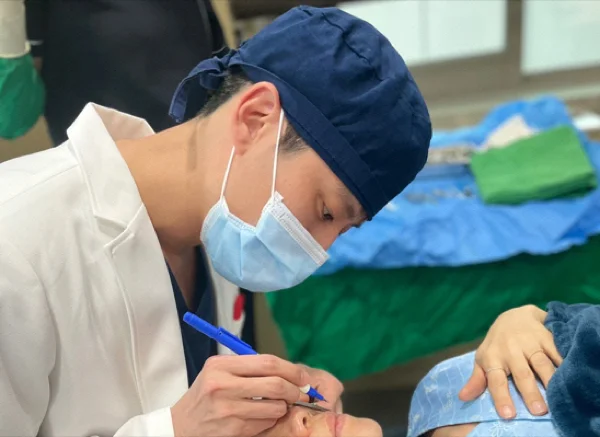
Official Channels — Learn More
🌐 Website: drtakprs.com
📝 Blog: Korean lip & philtrum specialist content
📹 YouTube: Before & after procedure videos
8 Things to Check Before Your Korean Lip Augmentation
✅ I understand what's causing my lips to look thin (vermilion, volume, mucosal show)
✅ I've decided between temporary (filler) and semi-permanent (fat grafting/surgery)
✅ I can arrange recovery time — at least 7–14 days
✅ I can avoid alcohol and smoking for 2+ weeks after treatment
✅ I am not currently pregnant or breastfeeding
✅ I'll disclose any history of cold sores (herpes labialis) before the procedure
✅ I'll share any previous lip treatments or surgeries during my consultation
✅ I have realistic expectations — natural improvement, not dramatic transformation
Frequently Asked Questions (FAQ)
The questions we hear most often at Dr. Tak Plastic Surgery in Korea.
Q1. Is Korean lip augmentation painful? What type of anesthesia is used?
For filler, we apply a topical anesthetic cream for 20–30 minutes before injecting. In my experience, the most common reaction is "that was much easier than I expected." The lips are sensitive, but the cream does most of the work — actual injection discomfort is minimal when patients are properly numbed. For fat grafting and mucosal advancement, we combine local and sedation anesthesia, so there is typically no pain during the procedure. The sharpest sensation most patients describe is the brief sting of the initial local injection.
Q2. When will swelling go down? When can I return to normal activities?
This is the question I'm asked most frequently at my Korean clinic. For filler, about 80% of swelling resolves within 3–5 days, and most patients feel comfortable returning to work within a week. For fat grafting and mucosal advancement, I advise a 2-week buffer — though many patients feel ready to go out after suture removal around day 7. The lips heal faster than most surgical areas I work on, which always comes as a pleasant surprise. If you have an important event, tell me the date and we'll plan the timing together.
Q3. How much does Korean lip augmentation cost? Is health insurance applicable?
Cosmetic lip augmentation is not covered by Korean national health insurance. Cost varies significantly by method and clinic. Filler is the most accessible entry point; fat grafting and surgery involve anesthesia and facility fees that raise the total. At Dr. Tak, I always explain exactly what you're paying for and why. Cost alone shouldn't drive the decision — finding the right method for your anatomy matters more. Contact us through the chat for current event pricing.
Q4. Will there be visible scarring? Can results look unnatural?
For mucosal advancement, the incision is placed inside the lip mucosa — completely hidden from the outside. In all the Korean lip surgery cases I've performed, none have resulted in visible external scarring. Unnatural results are most often caused by excessive volume or poor proportion planning. I always assess the full face, including philtrum length and facial balance, before designing any lip augmentation. This is where attention to Korean facial aesthetics makes a real difference.
Q5. How do I know whether filler, fat grafting, or surgery is right for me?
This is genuinely the hardest question to answer without seeing you in person — photos alone aren't enough. As a general guide: if this is your first Korean lip augmentation, start with filler. If you prefer your own tissue or want long-term results, consider fat grafting. If the issue is structural — your mucosa rolls inward and volume alone won't help — mucosal advancement is the most appropriate solution. One consultation gives me everything I need to give you a clear recommendation. Come in, and we'll figure it out together.
Dr. Tak Plastic Surgery | Korea's Lip & Philtrum Specialist Clinic
"To make people smile — helping people love their faces."